
Twilight Reminiscences 35 – The Pleasures of Reading
I have always enjoyed reading.
From my early schooldays, the pleasure of being curled up with a good book was something I enjoyed very much. I became a voracious reader, devouring comic books and those War Picture Library illustrated books (purchased for the price of one rupee in our schooldays) to more advanced story books and even classics that I would borrow from the British Council and USIS libraries.
In the course of time, this love of reading led me to write books myself, a hobby that has given me the opportunity to tell a few stories, research and write books about topics that interested me (like the ancient Maritime Silk Route and the Camino de Santiago) and be invited to speak at Literary Festivals in various parts of the world.
But what gave me enormous pleasure these last couple of months was reading books written by two old friends who were my classmates from primary school days. Their books not only brought back many memories of times shared but also carried a lot of information that is valuable from the historical point of view. Our days as young men, after all, are now part of history!
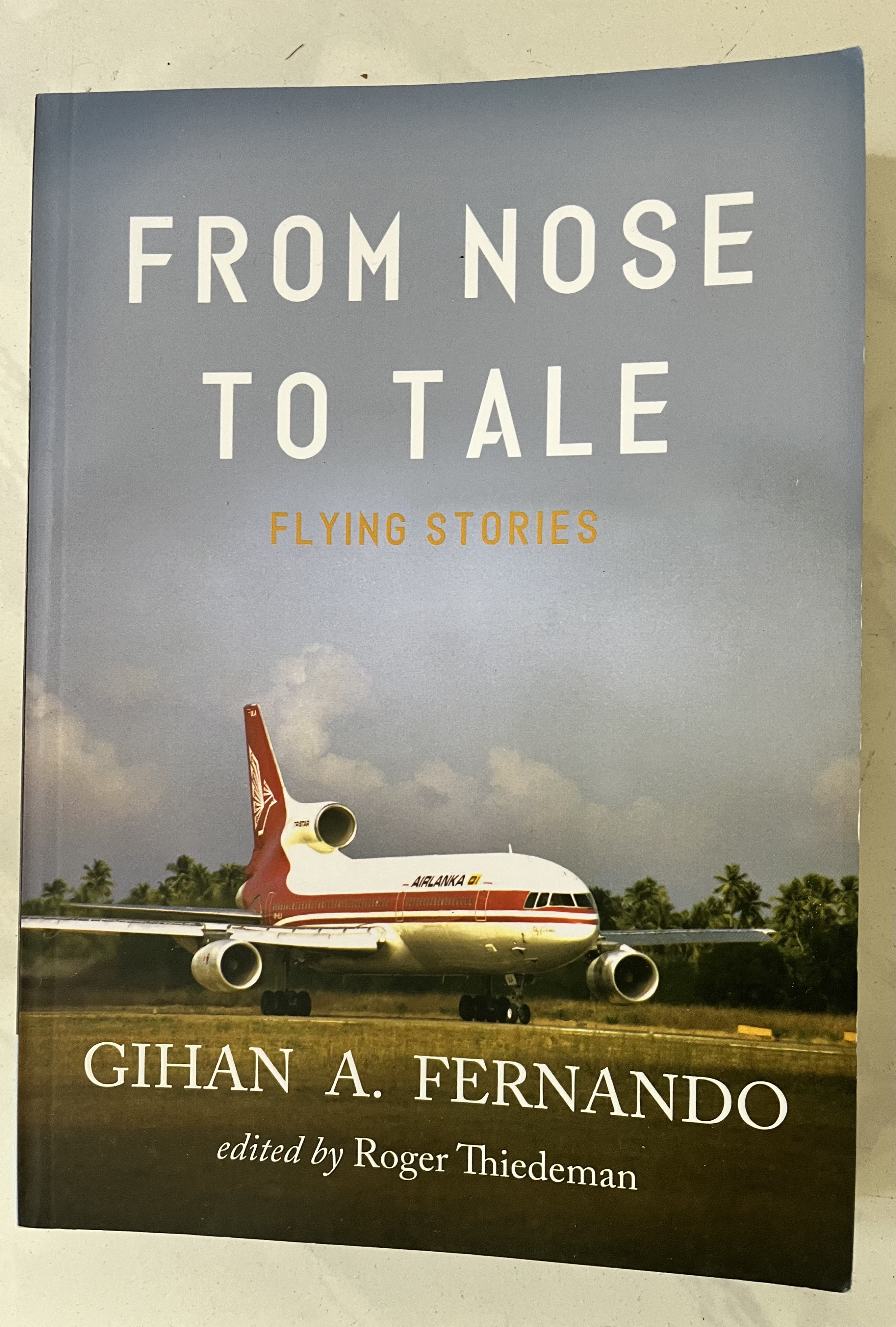
The more recent of these books, launched in Colombo last November, was by Gihan Fernando – aviator par excellence and one of this country’s most experienced airline pilots. Having commenced his training soon after leaving school on de Havilland Tiger Moth biplanes and Hindustan Pushpak monoplanes at the Ratmalana Flying Training School, he subsequently flew Chipmunks and Doves for our Air Force and in due course progressed to flying Avros for Air Ceylon, TriStars for AirLanka – and then the much larger Airbuses and Boeings for different commercial airlines.
Gihan (known from our schooldays as ‘GAF’) has put together a collection of stories from his flying career – personal recollections as well as anecdotes about friends and colleagues. Illustrated with some lovely colour pictures of airplanes past and present, his book FROM NOSE TO TALE makes for entertaining and informative reading, not just for flying enthusiasts but also for folk who like me enjoy an entertaining read.
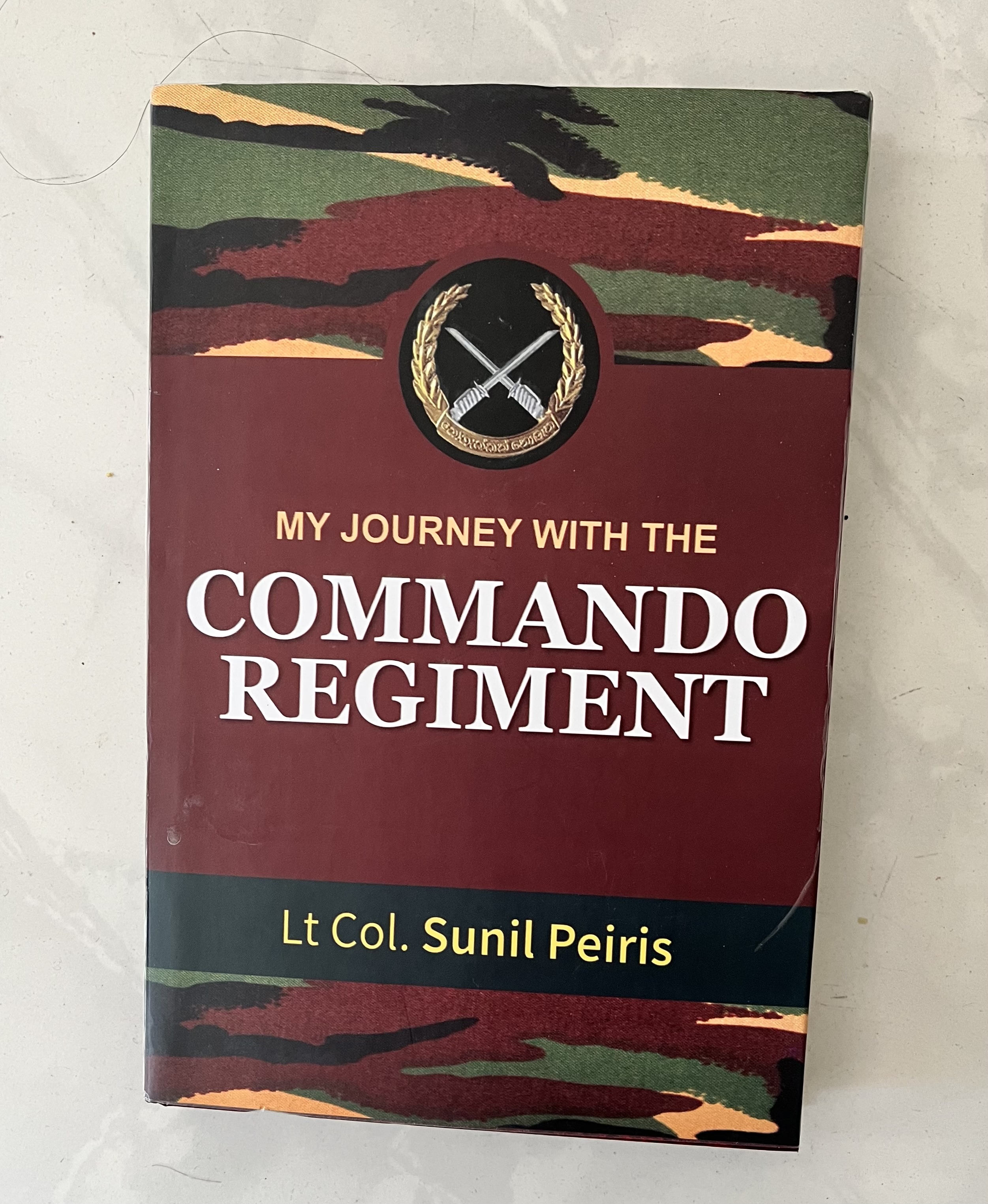
The other book written by an old classmate is Sunil Pieris’ MY JOURNEY WITH THE COMMANDO REGIMENT.
Sunil and I go back a long way, having known each other since primary school, playing at the same time for our College First Fifteen rugby team – and then serving together as young officers in the Sri Lanka army.
Sunil joined the army directly after leaving school, being in the first intake of officer cadets trained in this country at the Officer Training Centre in Diyatalawa (precursor to the Sri Lanka Military Academy). During a twenty-year career with the Army, Sunil accomplished much. He was a brilliant military officer, dedicated, honourable and straightforward – described by one of his former senior colleagues as ‘the finest lieutenant colonel the Sri Lanka Army ever had’.
Sunil describes in engaging detail how he was entrusted with forming the army’s elite Commando Regiment and how he set up their organisation and training. He gives the reader an insight into several operations – all significant and many dangerous – that the Commandos undertook.
Sunil, a man who never cultivated politicians, recounts in frank detail how, accompanying the then army commander on a patrol to ascertain the situation in Colombo during the violence of July 1983, he encountered a mob of thugs led by a then cabinet minister, who were hell bent on killing innocent civilians before looting and burning their homes.
Holding the minister by his collar, Sunil dealt him a couple of powerful blows – while a couple of his commandos similarly dealt with a few of the minister’s henchmen. Needless to say, the mob rapidly dispersed!
One of the saddest chapters in Sunil’s book recounts the day he resigned from the army. Given orders by then State Minister Ranjan Wijeratne to summarily execute in cold blood a group of young men (“suspected insurgents”) who were being sent to the commando camp, Sunil refused in no uncertain terms. Knowing that his courage in standing up to this politician and refusing to carry out what was manifestly an illegal order would not be well received, Sunil decided then and there to hand in his resignation.
It was a sad day for the army, losing one of its finest officers who refused to comply with an illegal order given by a political leader.
My re-reading of Sunil’s book last month was all the more poignant because it was around this time that we attended the funeral of another of our friends, Brigadier Vipul Boteju, a similarly independent, brave and forthright army officer.
Vipul was a man who epitomized integrity and fearlessness. He too, despite an illustrious career, was forced to leave the army rather than carry out similar illegal orders given by State Minister Wijeratne.
Sunil’s book is an authentic account of an important period in our country’s history, which will interest not only military history buffs but also all those of us who care about our country.
Both these books make for very interesting reading. Moreover, at a different level, they provide a record of true incidents that took place during our lifetimes.
These works by Gihan and Sunil – both esteemed friends from my childhood – and are not only links to the past but important documents for posterity.
Top Posts & Pages


Book: Tales From my Island

 Sanjiva Wijesinha -writer and physician
Recent comments