
The HSBC Ceylon Litereray & Art Festival 2026
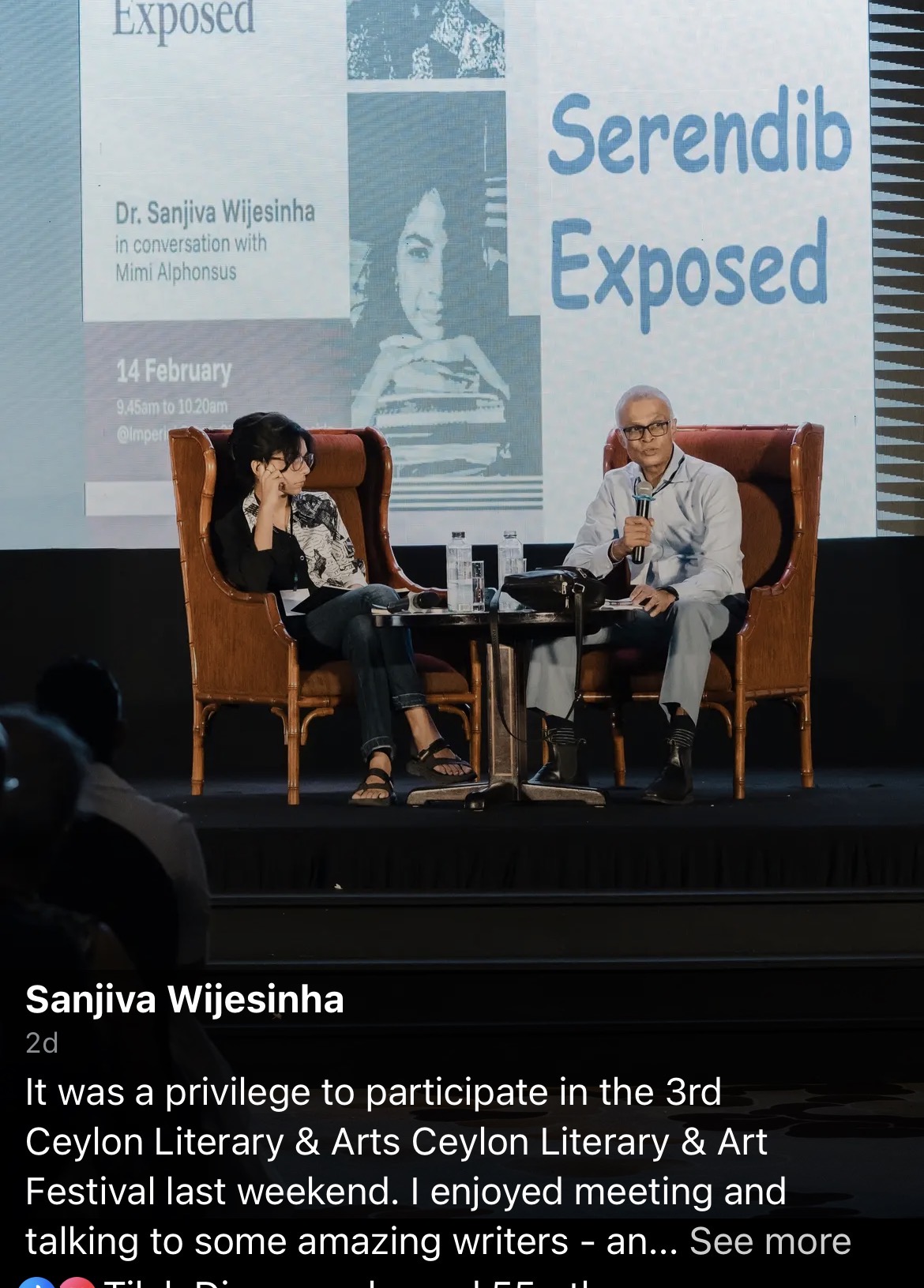
It was a pleasure as well as a privilege to be invited to be a speaker for the 3rd edition of the HSBC Ceylon Literary and Arts Festival, which was held at the Cinnamon Lakeside Hotel in Colombo last weekend (12th to 15th February 2026).
Two years ago, in February 2024, the inaugural Festival was held in both Kandy and Colombo. The brainchild of Ajai Vir Singh, the founder of Colombo Fashion Week, this first edition was curated by well known writer Ashok Ferrey. That initial festival began with sessions in the hill capital staged at Trinity College Kandy – and then moved to Colombo where sessions were held in the Public Library.
This was a time when the Galle Literary Festival, which started life in 2007, had already made a name for itself and had become one of the events most looked forward to in the South Asian festival calendar. When asked in 2024 why he had embarked on starting ANOTHER literary festival in Sri Lanka to be staged in the month following the well know GLF, Ashok’s pragmatic reply was that there was always room for more festivals if they were differentiated to add value. Having studied various similar festivals from Edinburgh to Jaipur, he conceived the idea of a festival that would showcase and celebrate Literature as well as the Arts. The idea was to be inclusive and to encourage youg writers and artists.
Buoyed by the success of the inaugural Fetsival, Ajai and his team staged the second HSBC Ceylon Literary and Arts Festival in Colombo in February 2025. Sessions were held at the Colombo Public Library and featured invited speakers from Sri Lanka as well as around the world. This coincided with the centenary of the Public Library, and continued the Future Writers’ programme started in 2024 – a special feature of this Festival that was created to identify and nurture writing talent in young writers in this country. Featuring dedicated workshops, a short story competition and the opportunity to be mentored by famous writers, the Programme aims to nurture and elevate the talents of young Sri Lankan writers.
This initiative invites aspiring writers aged 15 to 29 to develop their storytelling abilities through dedicated writing workshops and a national short story competition. The programme has already achieved success in the form of last year’s Gratiaen Prizewinner, Savin Edirisinghe, who acknowledged his winning of the 2024 Festival’s Future Wriiting Programnme Prize and the support and mentoring that he received therefrom as contributing to his success.
I myself enjoyed the 2026 edition which was ably curated by Mita Kapur, the Founder and CEO of Siyahi, one of India’s leading literary consultancies. It gave me the chance of meeting and interacting with a variety of leading writers and many interested readers.
It also gave me the oppoertunity to talk about my own writing and my new book Sri Lanka, Serendib and the Silk Road of the Sea – the session taking the form of an interview with Mimi Alphonsus, editorial director of The Examiner. Deftly guided by Mimi, we talked of many things – the archaeological, literary and etymological sources I had used in my research, the case for using oral history as a primary source of information, the various people like Naval historian Somasiri Devendra and Indonesian maritime historian Adrian Lapian who generously shared their vast knowledge with me.
Mimi commented that my book was “deliciously accessible and affordable” – to which I replied that my main aim was to make the information I had learned and the views that I had formulated available to as many people as possible, becauseI felt that I had a story that was worth telling that should be known by the people of Sri Lanka.
I decided to write my story in the form of ‘creative non-fiction’ because I wanted to make what I wrote engaging and interesting enough to the general reader – the “normal person” not just the historian, the archaeologist and the university academic. My purpose in writing this book is make a start – to open the eyes of others as mine have been opened.
I believe that what I have discovered and written about is well worth knowing. I would like readers to view our nation with fresh eyes and take pride in the fact that Sri Lanka, once upon a time, was a crucial player in world trade. This island was a crossroads for the trade routes between East Asia (present day China, the Phillipines, Indonesia and Malaysia) and West Asia (present day Oman, Yemen, and east Africa) – and her harbours were bustling centres of international commerce that brought to us not just trade goods but also ideas, religions, foods, music and culture.
There are certainly many more questions that need to be researched and many more answers waiting to be found – but I will have to leave that task for others.
If my book has provided a fresh perspective and an incentive for further research, that would truly be gratifying.
Top Posts & Pages


Book: Tales From my Island

 Sanjiva Wijesinha -writer and physician
Recent comments